who we are | about us
Religions for Peace UK
We are one of over 90 independent national chapters and inter-religious councils of the global Religions for Peace Movement, which is an entity accredited by the United Nations and an international multi-religious coalition guided by the vision of a world in which religious communities cooperate effectively for peace since 1970.
Ring of Peace, 2019 (Lindau, Germany)
Our Goal
Religions for Peace UK seeks to provide opportunities and resources for faith and belief communities and individuals to collaborate towards shared concerns. We believe that ambitious goals and intricate problems are best tackled when diverse faith actors pool their goodwill, experience and wisdom through collaboration. We aim to serve as a meeting place, an educational platform and a cross-border network to contribute towards a culture of peace that advances shared well-being, grounded in respect for the sanctity of life and human dignity.
Vision
The world’s religious communities cooperate effectively for Peace
Since its inception in the 1970s, the Religions for Peace Movement has been guided by the vision of a world where faith communities cooperate effectively to create a world where peace, harmony, and understanding prevail. We strive for inter-religious cooperation on global, regional, national, and local levels, paving the way for diverse religious leaders, communities, institutions, and individuals to work together on concrete and inclusive initiatives. Aiming to advance humanity, addressing common challenges such as conflict resolution, human rights, and sustainable development, we strive to harness the collective power of spirituality to create a more just and harmonious world.
Mission
Religions for Peace UK advances common action among faith and belief communities for peace
Aligned with the global priorities set out in the strategic plan of the Religions for Peace movement. We empower women and youth through focussed programmes, united by the belief that pressing issues are best tackled together. We reach out to build lasting relationships, transforming communities into cohesive networks. Bonds forged in times of conflict and fragmentation pave the way for common action between different faiths. Our work spans inter-religious, inter-convictional, inter-cultural, and inter-generational initiatives, creating broad avenues for understanding and solidarity. We continuously convene, catalyse, and encourage collaboration between communities in facing today’s challenges.
Our Networks
We share our work with our constituent UK Women of Faith Network
and the UK Interfaith Youth Network.
Together, we advance the strategy to build and strengthen sustainable mechanisms
that link local, national, regional, and global multi-religious structures,
forging partnerships with other sectors of society.
Religions for Peace UK is a national member of Religions for Peace Europe
and we all contribute towards the global Religions for Peace Movement.
UK Women of Faith Network
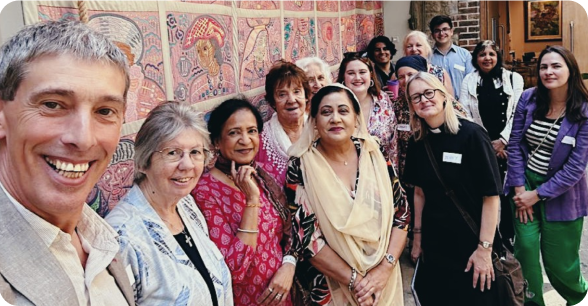
The UK Women of Faith Network (UKWFN) seeks to amplify the role of women of faith to achieve transformational changes to urgent challenges, thus securing a better environment for our future generations.
UK Interfaith Youth Network
The UK Interfaith Youth Network (UKIYN) is a multi-religious youth network with volunteers from multi and interfaith organisations in the UK to advocate for positive change for peaceful coexistence.

Our Approach

Convene
Religions for Peace UK identifies opportunities and provides resources for interfaith dialogue and learning

Catalyse
Through programmes on our priority concerns, our UK interfaith women & youth networks catalyse grassroots leadership and innovation

Collaborate
Identify shared goals among faith and belief communities and empower programmes for common action
Inviting Collaboration for Peace
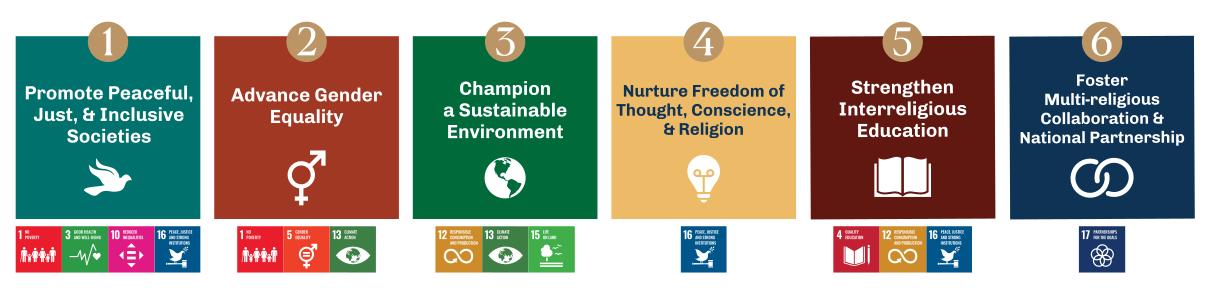
Our Key Priorities
Religions for Peace UK goals are consistent with our global multi-religious
vision of peace and are built upon our experience and achievements.
Each objective is aligned with one or more of
the UN Sustainable Development Goals (SDGs),
and our strategic goals are interrelated, so progress made towards one goal
will positively impact progress towards the others.
how it all began
Religions for Peace: THEN & NOW
who's who behind the scenes