Brief Report on the RfPUK seminar on February 28
Delegates from 9 religions gathered at Friends House on Saturday February 28 2015 to discuss the role of faith communities in the humanitarian initiative on banning nuclear weapons.
For decades, discussions on nuclear weapons have been dominated by the few nuclear-armed states – states that continue to stockpile and maintain over 16,000 warheads. The humanitarian initiative on nuclear weapons has prompted a fundamental change in this conversation, focusing on the actual effects of the weapons. Delegates heard how a nuclear weapons ban treaty would create a clear international legal norm against the possession of nuclear weapons and discussed how faith communities can best play their part in this discourse-changing humanitarian initiative to push states towards a ban treaty.
50 delegates debated the unique role of cooperation amongst and between religious communities, including women and youth, to help achieve a nuclear-free world. They agreed on a range of personal and communal actions such as the use of social media and direct conversations with religious and political leaders to get the debate back on the agenda, clearly focused on a treaty banning nuclear weapons by committed nations even without the participation of those armed with nuclear weapons. The meeting also heard a youth view on the issues, one not tainted by fear of the consequences of the Cold War.
Bishop Dr Gunnar Stålsett, Moderator of the European Council of Religious Leaders, said, “As with the campaign against cluster munitions, we need to engage hearts and minds as well as rational argument. Once again, the religious communities of the world are in a unique position to do this within the context of a civil society and humanitarian movement for a nuclear weapons ban treaty.” Dr Rebecca Johnson, Executive Director of the Acronym Institute for Disarmament Diplomacy stated, “It is an anomaly in international law that nuclear weapons are the only remaining weapons of mass destruction not subject to an explicit treaty prohibition.”
Religions for Peace UK Executive Director Jehangir Sarosh urged delegates to use their own faith, in principled solidarity with believers of other faiths, to help end the moral tyranny of nuclear weapons through this initiative for a nuclear ban treaty
The seminar was run in partnership with Quaker Peace & Social Witness, the Joint Public Issues Team, ICAN, CND and SGI-UK, all of whom provided input and resources, especially the Quakers who gave freely the meeting room, contributed to the refreshments and helped with the administration.
Explore other recent news
Interfaith Encounter
Providing an opportunity for interfaith organisations to work together, the Asha Centre https://www.ashacentre.org hosted an interfaith conference 22-23 May, making it possible...Read More...

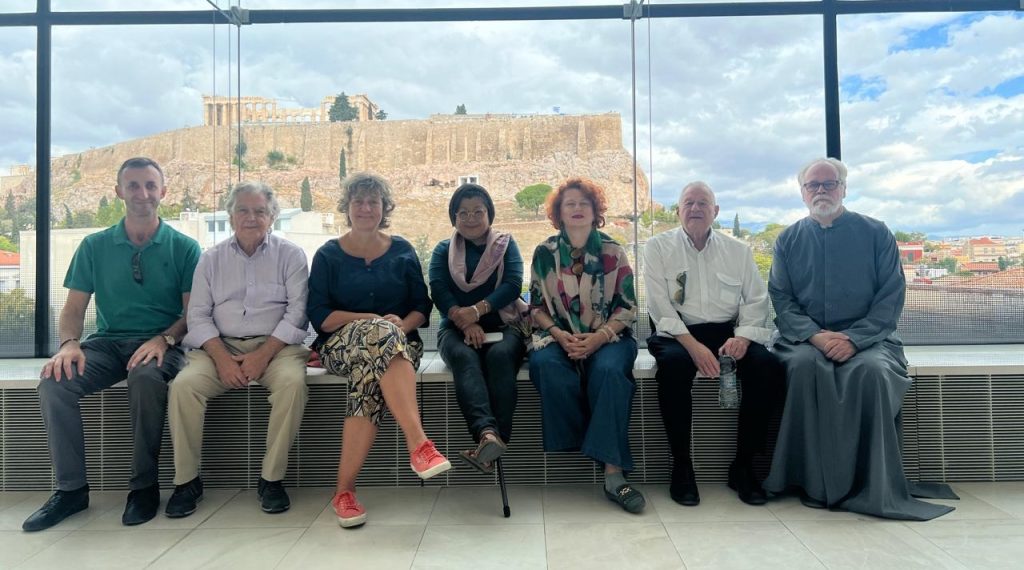
ENIB Board Meeting in Athens
RfP national chapter representatives from Bulgaria, Spain, Finland, Germany, Albania, Italy, the Netherlands and the UK...Read More...
SDGs Conference at #UNGA79
RfPUK and 3 other RfP European National Inter-religious Bodies (ENIB) members were invited by the Journalists and Writers Foundation to offer presentations...Read More...

New Secretary General at Religions for Peace International
The Religions for Peace World Council (Governing Board) is pleased to announce the appointment of Dr. Francis Kuria Kagema as its Secretary...Read More...
