Interfaith in Europe from a Dharmic Perspective
Bhati Tailor is a trustee of RfPUK
She is also a member of the European Council of Religious Leaders and President of the Hindu Forum of Europe
The following article was commissioned by Interfaith Observer and published in the June issue
There are more than 2 million Hindus scattered across Europe. Almost a third live in Britain and a sixth live in the Netherlands. Apart from that there are smaller communities in every country of Europe.
In many countries there are interfaith organisations, on continental Europe, these are often know as Interreligious organisations. However mostly these organisations reflect the three Abrahamic traditions only. The Dharmic Faiths Hinduism, Buddhism, Jainism and Sikhism are not always represented.
Sometimes this is due to lack of suitable candidates. Amongst Hindus to find people who are willing to take up seats on such committees can be a very difficult talk, but often times it is because they are excluded.
Hindus of Asian origin are fairly new migrants to Europe, and therefore they are still at the stage of development of securing food, shelter and other economic and safety needs and not necessarily at the level of spiritual engagement in interfaith circles which of course is also made more difficult by the lack of versatility in the European languages. So sometimes in interfaith circles we are referred to as groups with lesser history in Europe’s, shorter histories, and so on. Europe is still getting used to people of Vedic traditions. There are Hindus of European origin who could take part in such interreligious dialogue but people of the Abrahamic traditions, find it difficult to take these ‘converts’ on board. Indeed at a recent meeting of a group where there was a white Hindu nominated for a seat, an orthodox representative objected on the grounds that these people convert, and break up families!! Interesting considering that some of these orthodox traditions spend enormous resources converting people in India to Christianity! I wish I had remembered to quote from the Christian scriptures to this person “He that is without sin among you, let him cast a stone…”
The larger and more pertinent issue is the one of finding Hindus with the right skills to fill the seat in interreligious groups and organisations that are open and accepting. It can take years to find people and this is the biggest complaint I hear; that groups cannot find a Hindu to be part of interfaith. Active organisations and individuals get swamped as they are few and demand great.
There are many groups working on Interfaith, the Religions for Peace (RfP) is a large family working on these issues. There are Councils of Religious leaders such as the European Council of Religious Leaders, also many countries now have such councils, Belgium for example. Though the Belgium state itself is not inclusive and does not recognise Hinduism at an official religion the Belgian Council of Religious Leaders includes Hindu, Buddhist, Jain and Sikh leaders. The RfP family also includes RfP Europe, European Women of Faith Network (EWFN) and European Youth Network (EYN). There are many good people on these bodies who push the boundaries outwards in order to include faith other than the tradition 3 Abrahamic traditions in meeting. However, it is a difficult with the more conservatives who want to stick to what they have always known. I think fear of having to cut the pie of finance and privileges into smaller pieces also lies at the heart of resistance.
The European Network for Religion and Belief (ENORB), has been a shock to the system of the rather conservative Interfaith Dialogue in Europe. Set up just two years ago, this organisation is open to all faiths and belief organisation and those who are Humanist and denominations not included in the intrafaith discussion within the Abrahamic traditions. It has and may prompt the more conservative interfaith groups to take another look at inclusivity because they now have competition.
In Britain, which operated very differently to mainland Europe for many years now interfaith dialogues has included not three but nine faith traditions and worked very well. These nine were Buddhism, Christianity, Hinduism, Islam, Jainism, Judaism, Sikhism, Zoroastrianism, and the Quakers. However there was resistance including the Pagans until quite recently. Mainland Europe in miles behind in Interfaith arenas here the Pagans are never even mentioned. It has always surprised me how Europe can develop in Interfaith if the indigenous and oldest religion of the continent in not featured in the dialogue. However inclusivity is growing all the time and we are moving slowly towards greater openness and inclusivity.
The European Commission has a commitment to include faiths in dialogue and consultation and this June saw the 10th event for High Level religious leaders have an annual dialogue hosted by the president of the commission, with the President of the Parliament and the Union and some 20 leaders. At this event a joint statement from the politicians and the religious leaders was issued on the situation of Mariam Ibrahim who has been sentences to death in the Sudan.
Similarly the ECRL in its annual meeting in May also issues statement on abduction of girls. For religious leaders to be seen together at European level and making statements together is very dynamic and empowering. It of course also leads to cooperation on other issues too. For example, the situation in Bosnia was improved greatly by the fact the former Mufti Mustafa Ceric was a man with a vision and experience of Interfaith dialogue and a very active member of the ECRL. EWFN launched the project Restoring Dignity to Women in Sarajevo in 2012, at the annual meeting of the ECRL to highlight the issue of rape and violence and that was possible because of the good dialogue already taking place.
Currently the situation in Europe is moving towards inclusivity and we are determined that the Dharmic traditions will be a part of this movement. It means we have to work hard to raise our profile find the right calibre of people to fill the gaps and dedicate the time and effort needed to make it all work.
Explore other recent news
Interfaith Encounter
Providing an opportunity for interfaith organisations to work together, the Asha Centre https://www.ashacentre.org hosted an interfaith conference 22-23 May, making it possible...Read More...

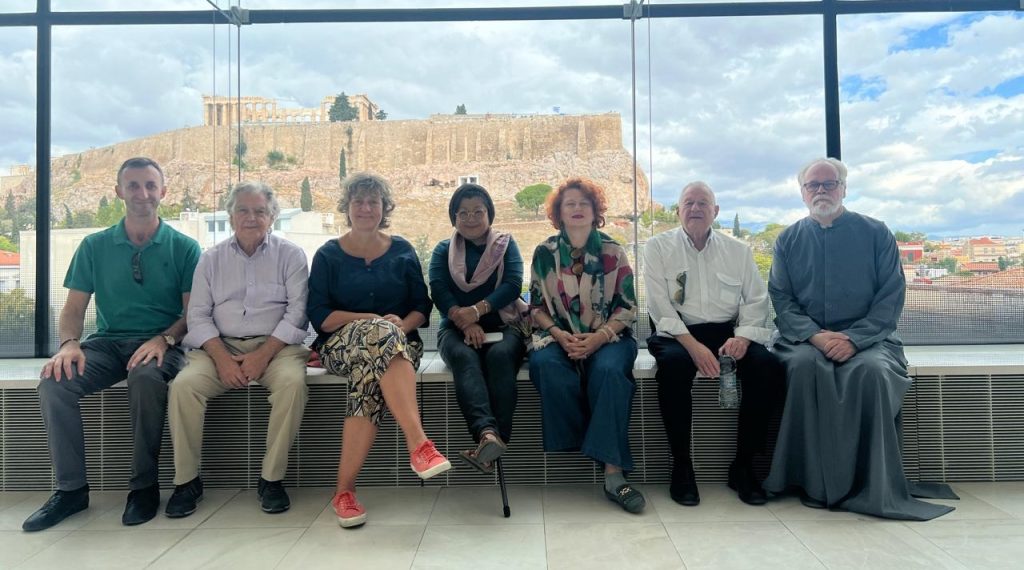
ENIB Board Meeting in Athens
RfP national chapter representatives from Bulgaria, Spain, Finland, Germany, Albania, Italy, the Netherlands and the UK...Read More...
SDGs Conference at #UNGA79
RfPUK and 3 other RfP European National Inter-religious Bodies (ENIB) members were invited by the Journalists and Writers Foundation to offer presentations...Read More...

New Secretary General at Religions for Peace International
The Religions for Peace World Council (Governing Board) is pleased to announce the appointment of Dr. Francis Kuria Kagema as its Secretary...Read More...
