Interpretation of “Religious Leader”
Interpretation of “Religious Leader”
At the behest of RfP International, RfP UKWFN Chair Ravinder Kaur Nijjar answered a pre Assembly question for the German Press “Kirchenbote” which was published on November 8.
The question Ravinder was asked was “How do you interpret your role as a female religious leader? What priorities do you set that men would maybe set differently?” The following is her response in English.
“The term religious leader is not one that resonates with me. I consider myself as a transient spiritual being trying to serve God and Creation whilst residing temporarily on our Planet Earth. Women’s success is brought about by their efforts based on influencing outcomes through partnerships and networks, this special quality of leadership has enabled achievement in facing arising challenges throughout the centuries. Women tend to work by using dialogue and concrete actions, building trust and friendships between communities and people at the local societal level. This encourages community cohesion, a sense of belonging and a shared vision that we can build a better, just and peaceful world for ourselves and future generations.”
Explore other recent news
Interfaith Encounter
Providing an opportunity for interfaith organisations to work together, the Asha Centre https://www.ashacentre.org hosted an interfaith conference 22-23 May, making it possible...Read More...

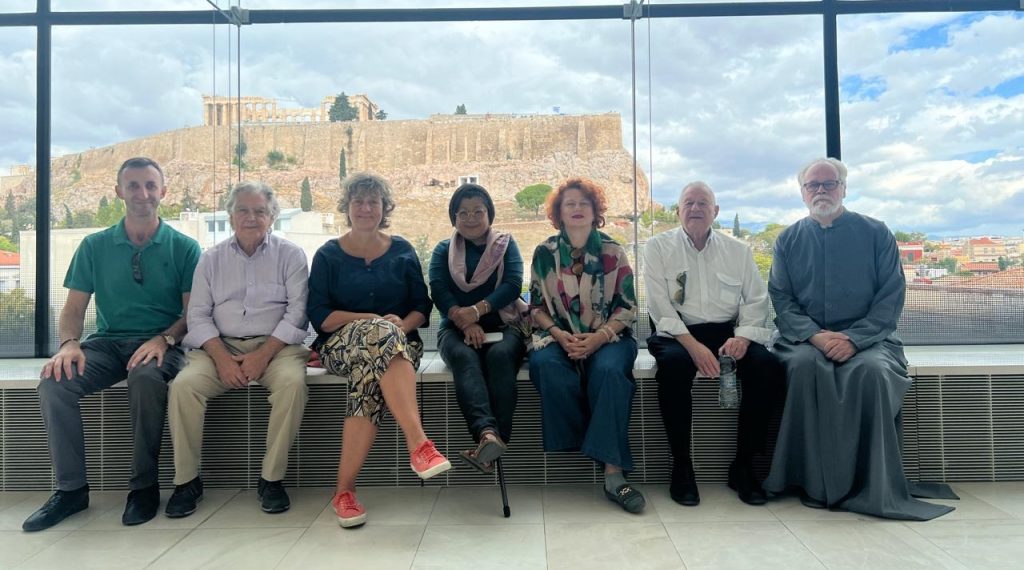
ENIB Board Meeting in Athens
RfP national chapter representatives from Bulgaria, Spain, Finland, Germany, Albania, Italy, the Netherlands and the UK...Read More...
SDGs Conference at #UNGA79
RfPUK and 3 other RfP European National Inter-religious Bodies (ENIB) members were invited by the Journalists and Writers Foundation to offer presentations...Read More...

New Secretary General at Religions for Peace International
The Religions for Peace World Council (Governing Board) is pleased to announce the appointment of Dr. Francis Kuria Kagema as its Secretary...Read More...
